Showing posts with label Environment Management. Show all posts

Friday, 29 July 2022

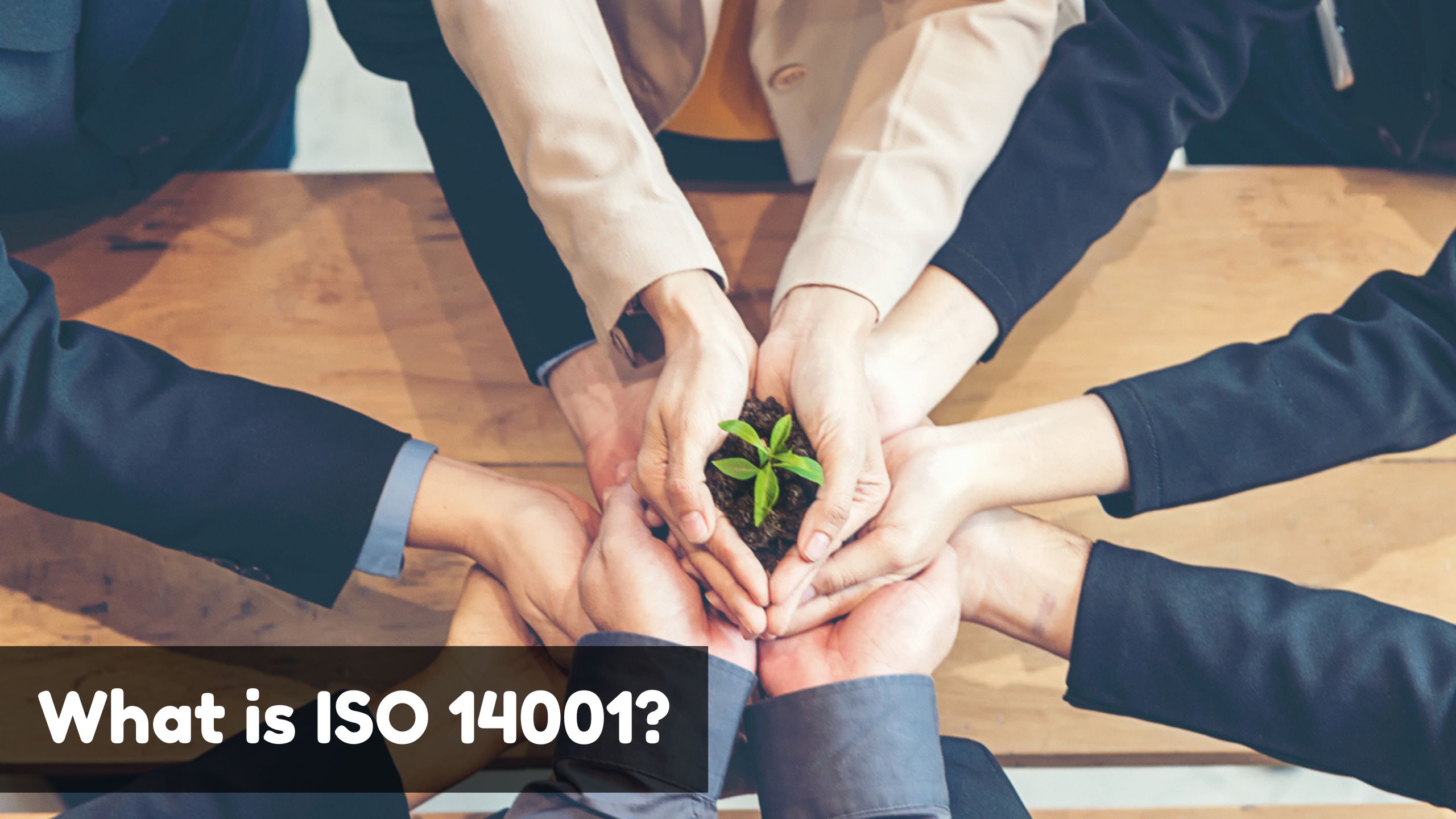
What is ISO 14001?


A widely accepted standard for an environmental management system is ISO 14001 (EMS). The requirements for reducing and enhancing an organization's environmental effect are outlined in this standard. The organizations first put the norm into practice in 1996. Controls are suggested by the ISO 14001 Standard for processes that influence the environment. Using environmental resources, managing environmental trash, and energy use are a few examples.

The worldwide standard known as ISO 14001:2015 outlines the criteria for a successful environmental management system or EMS.

Organizations can follow a framework provided by ISO standards. Organizations are free to choose whether or not to abide by any of the ISO standards.

What is ISO 14001 for?

The primary goals of ISO 14001 are to outline the specifications for the EMS and offer instructions for its implementation. The standard provides a planned action for enhancing the environment within the organization.

A set of publications known as ISO 14000 deals with the establishment of an environmental management system (EMS).

  • Learn more about the whole family of ISO 14000 Standards
  • The criteria of an EMS according to ISO 14001:2015
  • EMS Guidelines, ISO 14001:2015
  • Guidance on a phased approach

Essentials of ISO 14001

The following fundamental components are part of the ISO 14001 environmental management systems standard:

Management assessment of environmental policy, planning, implementation, and operation, as well as checking and corrective action.

An environmental management system evaluation, which includes applications for environmental management systems, is the first step in environmental management system awareness. It then looks at the specifications for environmental management systems and offers advice for use, including but not limited to:

  • Components of an environmental management system
  • How to implement a management system for the environment
  • Costs of an environmental management system
  • Environmental and quality management systems that are combined
  • Improvement of the environmental management system

Also, Check -->> Who needs ISO 14001 Standard?

Benefits of adopting ISO 14001 Certification

An environmental management system example must begin with a broad strategic perspective and commitment by management to handle both the short-term and long-term effects of this activity. The International Organization of Standardization (ISO), a global organization that develops many different kinds of standards, has created a series of standards to assist with the implementation of environmental management systems to assist individual businesses with this process, reduce implementation costs, and ensure acceptance by other organizations such as customers, local and national governments, and the general public.

An organization or business can control its environmental impact methodically by using an environmental management system. Because of the enhanced productivity and efficiency, the company can save more money. The ability to achieve a high degree of environmental performance that demonstrates an organization's entire commitment to reducing environmental waste, pollution and energy consumption is another major advantage of implementing the ISO-14001 environment system. Other major advantages of adopting ISO 14001 Certification are:

1. Lower costs as a result of greater environmental efficiency

2. Reduction in environmental obligations

3. Reduced risk from the environment

4. Enhanced organization's capacity to compete in the world market.

By granting certification, the registrar is certifying that the entity's environmental management system has been evaluated and approved following the requirements of ISO 14001 Certification in Sri Lanka and is specifically applicable to the industry in which they operate (i.e., manufacturing a specific type of product or offering a specific service). You can use the certification mark you obtain once your organization has been certified on your stationery, and websites.

Why third-party 14001 consultancy?

The tools, training, and documentation you need to self-certify your business for ISO 14001 are available from hustle free. Numerous businesses all across the world have adopted this effective system.

Friday, 27 May 2022

What is Environmental Management and Protection?


The term environment has arrived from the French word 'environia,' which means to surround. The environment incorporates every one of the living and non-living parts near us and with whom we have the day-to-day interactions which are important for our endurance.

It is the area wherein we work and incorporates all components of nature. Creatures, including individuals, communicate with the parts of their current circumstances to support life.

All creatures are exceptionally subject to their surroundings for food, water, and stable day-to-day environments. Hence, organisms need to manage the environment that they live in.

Natural administration additionally incorporates the parts of the biophysical environment and the human environment, similar to the cultural, social, political, and monetary conditions.

The actual environment involves all the abiotic factors or conditions like temperature, precipitation, light, minerals, soil, and so forth. It likewise involves the environment, lithosphere, and hydrosphere. Then again, the biotic environment involves every single biotic element or living structure like creatures, miniature life forms, plants, and so forth.

In any case, we frequently fail to remember the significance of environment management and take part in exercises that will hurt it. Instances of such activities incorporate deforestation, soil disintegration, obliteration of untamed life, air contamination, water contamination, and so on.

Such destructive activities have been happening for ages, prompting numerous extreme changes in our current circumstances. For instance:

1.      Extinction and danger of different types of species are important to keep up with balance in the biological system.

2.      It is prompting the contamination of seas and drying out of various water bodies like oceans, streams, and lakes through chemical emissions,

3.      It is dissolving snow and ice on mountains because of an unnatural weather change.

4.      Depletion of the ozone layer, cleaning up petroleum products, discharge of unsafe gases like chlorofluorocarbon (CFC), carbon mono oxide (CO), methane (CH4), and other harmful gases very high from manufacturing plants and vehicles.

5.      Accumulation of plastic waste in each layer of the lithosphere, hazardous rapidly spreading fires are obliterating sections of land of woodlands and a large number of creatures in it.

What Is the Importance of Environmental Management?

We can say that we have just a couple of years to invert the adverse consequence on our valuable environment. Accordingly, natural administration is the need of great importance.

Natural administration is the instrument with which we can advance ecological assurance and deal with general wellbeing from the poisonousness delivered by destructive human activities with various resources of the environment.

Numerous business organizations overall are approaching numerous ecological administration frameworks and plans such as ISO 14001 Certification to their business plans for natural security.

The different advantages and significance of ISO 14001 EMS administration are as per the following:

                  ISO 14001 administration decreases the possibilities of dangers of ecological episodes like oil slicks in seas or timberland fires, or the exploding of coal mineshafts, in this way guaranteeing ecological security.

                  It works on the organization's standing by advancing their image picture as eco-accommodating and getting the market, which further assists them with social event clients and lowers their working expenses.

                  Ecological administration works on general wellbeing and the general soundness of the biological system by limiting the harm done because of the carelessness of enormous organizations and advancing natural security.

                  Builds the labor force's morale about the effect of thoughtless business strategies on the environment and concentrates on embracing ways that will assist with lessening ecological consumption.

                  Ecological administration and security help in the decrease of waste delivered by organizations as side-effects during assembling.

                  It assists with new business thoughts utilizing waste side-effects to make new items. The results of oil are utilized to produce Vaseline, LPG, fuel, paraffin wax petrochemicals, and so forth.

                  It assists with setting targets and various systems for preparing to accomplish ideal outcomes.

                  Accomplishing ideal use of assets by following legitimate requests and keeping up with consistency all through the interaction.

The Environment Management system administration frameworks (EMS) trailed by different organizations overall for ecological insurance are under the accompanying heading.


Wednesday, 30 March 2022

5 phases of an EMS, as characterized by the ISO 14001 standard


What is Environmental Management? 


Environmental management is "an intentional action to keep up with and work on the condition of environmental resources impacted by human exercises. 


Environmental management under ISO 14001 Certification further intends to guarantee that environment administrations and biodiversity are ensured and kept up with for fair use by future human ages, and keep up with biological system respectability as an end in itself by thinking about moral, monetary, and logical (biological) factors. Biological administration attempts to distinguish the elements that have a stake in the contentions that might ascend between addressing the requirements yet securing the climate. 


• Identification: Via protests/worries from the local area we distinguish a specific natural issue 


• Evaluation: Inspections with important Government Departments (Provincial and National) we decide the degree of the issue 


• Control: The issue is brought to the consideration of the violator/polluter and the individual/organization who is educated to stop the criminal behavior and address the issue or concerns which incorporate the recovery of the area(s). 


Environmental Management Officials has a legal commitment to ensure the climate for the present and the people in the future as revered in the Constitution's Bill of Rights 


Also, Check -->> ISO 14001 Certification for rubber industries


Specifically, the Bill of Rights specifies that: 


"Everybody has the right – 


(a) To a climate that isn't hurtful to their wellbeing or prosperity; and 


(b) To have the climate secured, to serve present and people in the future, through sensible authoritative and different measures that – 


(I) Forestall contamination and biological corruption; 


(ii) Advance preservation; and 


(iii) Secure biologically maintainable turn of events and utilization of normal assets while advancing reasonable monetary and social development". :


The five main stages of an EMS, as defined by:


1. Responsibility and Policy - Top administration focuses on natural improvement and sets up the organization’s environmental strategy. The approach is the establishment of the ISO 14001 EMS. 


2. Arranging and planning- An organization initially recognizes the ecological parts of its tasks. Ecological angles are those things, for example, air poisons or dangerous waste, that can contrarily affect individuals and additionally the climate. An organization then, at that point, figures out which perspectives are critical by picking measures considered generally significant by the organization. For instance, an organization might pick laborer wellbeing and security, ecological consistency, and cost as its standards. When a critical environment is not set in stone, an organization sets destinations and targets. A goal is a by and large ecological objective (e.g., limit utilization of synthetic X). An objective is a point by point, a measured prerequisite that emerges from the goals (e.g., diminish the utilization of synthetic X by 25% by September 2030). The last piece of the arranging stage is conceiving an activity plan for meeting the objectives. This incorporates assigning liabilities, setting up a timetable, and laying out characterized steps to meet the objectives. 


Also, Check -->> ISO 14001 Certification for mining industry


3. Execution - An organization finishes the activity plan utilizing the essential assets (human, monetary, and so forth) A significant part is a representative preparation and mindfulness for all workers (counting assistants, project workers, and so on) Different stages in the execution stage incorporate documentation, following working methodology, and setting up internal and external communication lines.


4. Assessment - An organization screens its activities to assess whether goals and targets are being met. If not, the organization makes a restorative move following ISO 14001 certification requirements. 


5. Audit - Top administration surveys the after-effects of the assessment to check whether the EMS is working. The executives decide if the first natural strategy is predictable to the organization's qualities. The arrangement is then overhauled to advance the viability of the EMS. The audit stage makes a circle of persistent improvement for an organization.


This is how ISO 14001 Certification is implemented in the organization.